
Jesus at Work: How Jesus Taught Us About Joy in an African Village
In 2004, my oldest son, Zac, graduated from high school, and together we took a two-week trip to Botswana, South Africa, and Zimbabwe.
The son of a successful New York City executive, Zac grew up in the very affluent environment of Fairfield County, Connecticut. He and his friends enjoyed the kinds of luxuries, exciting experiences, and material possessions about which most American teenagers can only dream. He was popular in high school, and as a senior he captained both his football and lacrosse teams.
If that sounds like an idyllic life, it wasn't.
Like so many other advantaged young people, Zac had suffered for years from depression. Despite all the advantages surrounding him, he often seemed unable to be truly happy or to enjoy life.
As his father, I found that heartbreaking.
I had hoped and prayed that our trip to Africa might be therapeutic because it offered Zac an opportunity to enjoy two of his greatest passions: photography and herpetology.
I shared Zac's passion for photography and was fascinated by African wildlife, so the trip was exciting for both of us. We took thousands of digital photographs and, even though it was winter in southern Africa, encountered a number of snakes and other reptiles.

At Singita, a luxurious camp in Kruger National Park in South Africa, we enjoyed twice-a-day jeep safaris. On our first day we observed at close range all of the "big five" game animals—lions, leopards, African elephants, rhinos, and Cape buffalo.
On our first night, we saw a mother cheetah feeding her two cubs and later watched a pride of lions feeding on a freshly killed wildebeest. We were sitting in an open jeep only ten or fifteen feet away, close enough to see, hear, and smell these enormously powerful animals.
On our second day, we asked our guides if we could search for snakes. They told us it was highly unlikely that we would find any during the winter.
Within minutes, Zac and our guide were on foot tracking a fifteen-foot python. The guide carried his rifle while Zac actually touched the python's tail as it slithered through tall grass and up a rocky ledge.
For a young man fascinated by reptiles, it was an extraordinary experience.
But neither the python nor the lions nor the elephants would become the defining moment of our trip.
God had something else in store for us.
One afternoon between scheduled jeep excursions, we left the extraordinary luxury of Singita and traveled with a guide and two other guests to a fairly primitive local village. Protected from dangerous wild animals by fences, the community contained homes ranging from simple cinder-block structures to grass huts with dirt floors.
We had never seen anything like it in the United States.
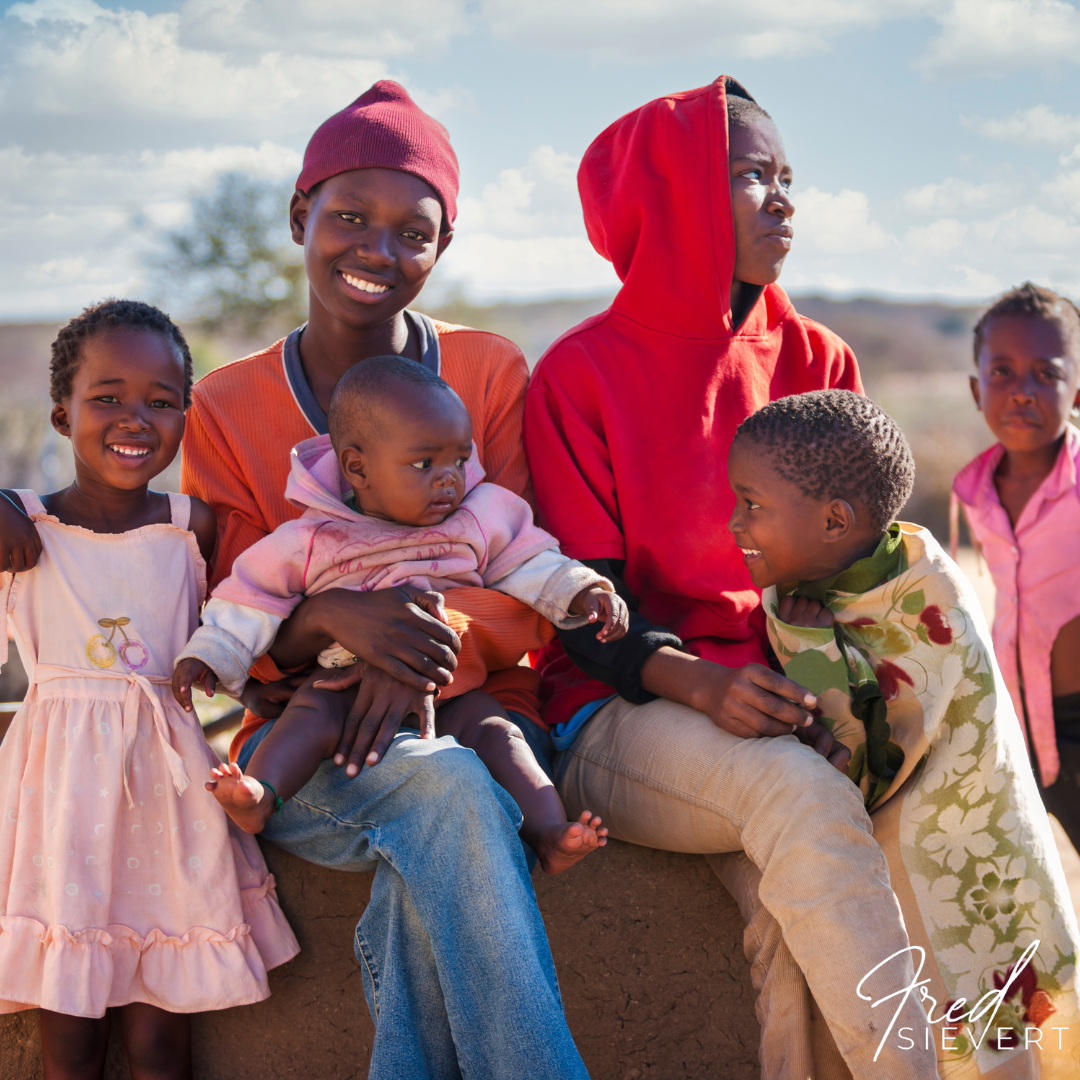
We first visited the village preschool, where approximately forty children between three and five years old greeted us. They were charming, energetic, and extraordinarily happy. They sang and acted out songs for us, including an African version of "Old MacDonald Had a Farm" involving wild animals.
The children's smiles were infectious.
Next we watched adult women preparing meals using the simplest utensils. This wasn't a historical demonstration of how their ancestors had once cooked. This was how meals were prepared every day—without the modern appliances we considered necessities back home.
Senior men of the village proudly escorted us into a small hut serving as a museum of local history and ancestry. Although they spoke no English, their delight was unmistakable as they handed us treasured artifacts—headdresses, nose rings, musical instruments, and weapons.
Many were old, dusty, and damaged. I couldn't help thinking that some people in our affluent Connecticut community might have regarded these cherished possessions as rubbish.
The visit concluded with refreshments and performances by dancers and singers in traditional dress.
But what struck both Zac and me most deeply was not what these people lacked.
It was what they possessed.
Everywhere we went, people welcomed us warmly. Children laughed. Adults smiled. Families and neighbors interacted joyfully. Their hospitality was genuine and abundant.
There was an unmistakable sense of community.
And there was joy.
Later we traveled to Mombo Camp in Botswana, another spectacular and luxurious safari destination. The wildlife viewing there was even more remarkable.
Each evening, guests from the camp's nine cabins ate together around one large candlelit oval table and afterward gathered around a campfire to share stories.
On our final evening, I sat several seats away from Zac. The sun had disappeared, the temperature had cooled, and in the darkness surrounding us we could periodically hear lions roaring, hippos snorting, and elephants trumpeting.
At a lull in the conversation, an older gentleman asked Zac a simple question.
"What was the highlight of the trip for you?"
I knew exactly what I expected him to say.
Perhaps photographing the lions.
Perhaps seeing the elephants.
Surely tracking and touching that fifteen-foot python.
"It was the visit to the village outside Singita," Zac answered.
"Really?" the man responded. "Why was it so special?"
"Because the people were so happy," Zac said simply. "They had absolutely nothing—no cars, no refrigerators, no expensive toys—but they were happy because they had each other. They had the love of family and the support of their community."
I looked across the candlelit table at my eighteen-year-old son, and my eyes filled with tears.
For a young man who had enjoyed almost every material advantage yet had struggled with depression, this was more than an observation.
It was a revelation.
The table became silent.
Nearly everyone sitting there was financially comfortable. We were staying at an expensive safari camp in one of the most exotic places on earth. We understood immediately the irony—and the truth—of what this eighteen-year-old had just said.
Later, several guests congratulated me on the young man we had raised. Around the campfire that evening, others spoke emotionally about the lesson Zac had taught us.
But as I wiped the tears from my cheeks, I realized something else.
I don't believe Zac was the only teacher at that table.
I believe Jesus Christ was teaching all of us.
Throughout His ministry Jesus repeatedly warned about the spiritual danger of allowing possessions to possess us. He taught that life does not consist in the abundance of things we own. He told us to store up treasures in heaven. He taught us to love one another.
Thousands of miles from our affluent American communities, those teachings suddenly became real.
I had prayed that this trip might somehow help my troubled son.
God answered that prayer in a way I never could have designed.
The answer didn't come through a counselor, a physician, a book, or a lecture from his father.
It came through joyful children in a poor African village.
It came through families who possessed very little materially but seemed rich in the things that mattered.
And ultimately it came through Zac himself, as the Holy Spirit transformed what he had observed into a lesson that touched every affluent person sitting around that candlelit table.
That evening in Botswana, I watched my eighteen-year-old son teach a group of accomplished adults something Jesus had been teaching for two thousand years:
Our deepest joy will never be found in what we possess.
It is found in whom we love, how we live, and ultimately in the One in whom we place our faith.
For Reflection
I am not saying this because I am in need, for I have learned to be content whatever the circumstances. I know what it is to be in need, and I know what it is to have plenty. I have learned the secret of being content in any and every situation, whether well fed or hungry, whether living in plenty or in want. I can do all this through him who gives me strength.
Philippians 4:11–13
Wealth can provide comfort, opportunity, education, travel, security, and countless other blessings. I have experienced those blessings myself and remain deeply grateful for them.
But wealth cannot guarantee contentment.
That lesson became intensely personal for me because my son had grown up surrounded by material abundance while simultaneously struggling with depression. Then, in an African village where people possessed only a fraction of what he took for granted, he encountered something he desperately wanted but money had been unable to provide: joy.
Paul understood the distinction. His contentment didn't depend upon whether he was living "in plenty or in want." Its source was Christ: "I can do all this through Him who gives me strength."
Perhaps that is the real miracle in this story.
I had prayed that God would help Zac. I could not have anticipated that Christ would answer my prayer through a visit to a primitive village in Africa—or that He would then use my son to deliver the lesson back to me and a table full of affluent adults.
Have there been moments in your life when someone who appeared less fortunate than you possessed something spiritually that you lacked?
Have you encountered people with fewer possessions but greater joy, stronger families, deeper faith, or more genuine contentment?
And when you look honestly at the things that give your own life meaning, how many of them can actually be purchased?
Jesus told us where our treasure is, there our heart will be also.
Perhaps we should periodically examine our treasure.
And perhaps, like Zac and me, we may discover that some of the richest people we will ever meet own almost nothing.